

How to Choose the Right Mixer for Your Bakery
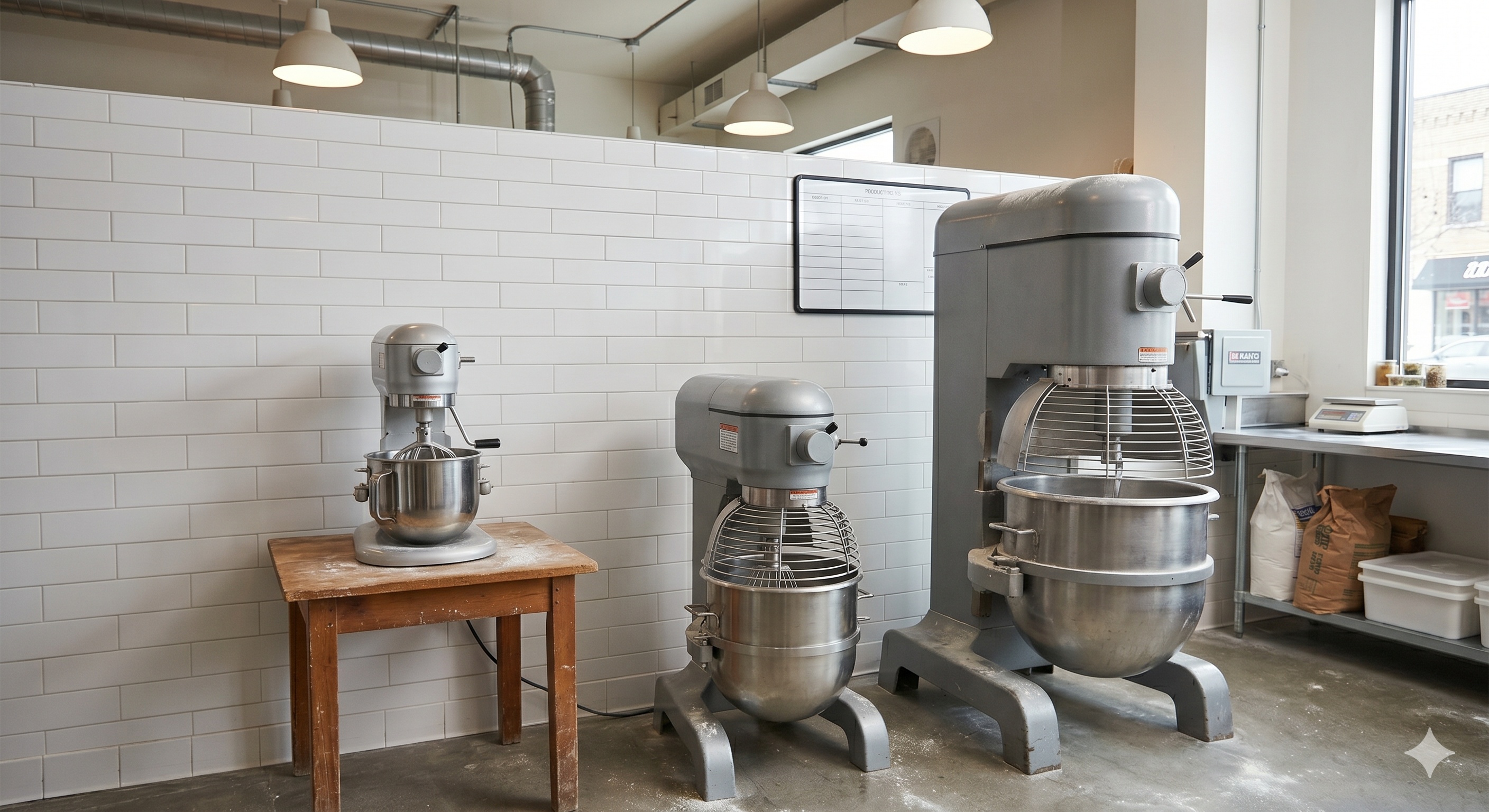
Should I Size Up? What to Consider Before Your Next Mixer Purchase
When your current mixer starts struggling with your daily production, the temptation is to simply buy the biggest machine your budget allows. But in a professional kitchen, bigger isn't always better. The real question is: "What am I mixing, how often, and can my kitchen actually support the upgrade?".
Before you fall in love with a 60-quart floor model, consider these critical factors to ensure your next investment makes production smoother, not more complicated.
1. Look Beyond Bowl Size
A common mistake is buying based on liquid-quart capacity alone.
- The Power Factor: For heavy doughs, usable capacity is determined by motor torque and batch weight, not just the size stamped on the bowl.
- Absorption Matters: Lower-absorption (stiffer) doughs put more strain on the motor. Using ice or high-gluten flour can actually reduce a mixer's rated capacity by 10%.
2. Match the Mixer to Your Menu
Don't choose a machine based on a "hypothetical" future; choose it for what you bake today.
- Planetary Mixers: The "Swiss Army Knife" of the kitchen. Ideal if you need one machine to handle buttercream, cake batter, and occasional bread dough.
- Spiral Mixers: The "Specialist". If bread or pizza is your core business, a spiral mixer is superior for high-volume kneading and dough development.
3. The "Small Batch" Trap
While we often worry about a mixer being too small, a mixer that is too large is equally problematic.
- Poor Incorporation: If the batch is too small for the bowl, the agitator won't reach the ingredients properly, leading to inconsistent mixing and unmixed flour at the bottom.
- The Golden Rule: The best machine handles your regular production volume, not just your busiest holiday peak.
4. Infrastructure: The Invisible Cost
This is where many operators get blindsided. Before you buy, check your:
- Utilities: Smaller mixers often run on standard 110V power, but larger models frequently require 200–460V and specialized plugs.
- Workflow: Consider the "swing" of the bowl and the clearance needed for cleaning. A floor mixer doesn't just need a footprint; it needs a workspace.
5. Maintenance and Long-Term Value
A mixer is only a good investment if it stays running.
- Service Access: Check for local availability of OEM parts and authorized service technicians. Downtime in a bakery is incredibly expensive.
- Warranty Awareness: Read your warranty like an operator. Most cover one year from installation, but improper installation or misuse can void that protection immediately.
The Bottom Line
Don't size up just to "feel safe". Size up when your current equipment is a true bottleneck for consistency, output, or labor efficiency. The goal is to find the mixer that fits your near-term growth without creating new space, power, or maintenance headaches.
Make the Right Move with Pastry Per Diem
Deciding on major equipment is one of the most stressful parts of owning a bakery. At Pastry Per Diem, we help you navigate these decisions by analyzing your menu, your production flow, and your operational reality.
Don't guess on your next big purchase. Contact Pastry Per Diem for an equipment consultation and ensure your kitchen is built for success.
Scale Your Business With Confidence
Get weekly insights on kitchen operations, recipe management, and growth strategies—straight from a pastry consultant who understands your challenges.
What's Next?
We're committed to seeing your business thrive. Check out our other resources to start taking your business to the next level.

Back-of-House Systems That Keep Your Kitchen Profitable
Tame the chaos of your back-of-house. From digital prep sheets to ergonomic station organization, mastering the basics of kitchen management is the first step toward a scalable, professional bakery.

SOP Bundle Pro
This SOP Bundle gives you the structure, systems, and tools to run your business like a pro—streamlining daily operations, scaling long-term growth, and keeping everything organized, efficient, and consistent.
