

Back-of-House Systems That Keep Your Kitchen Profitable
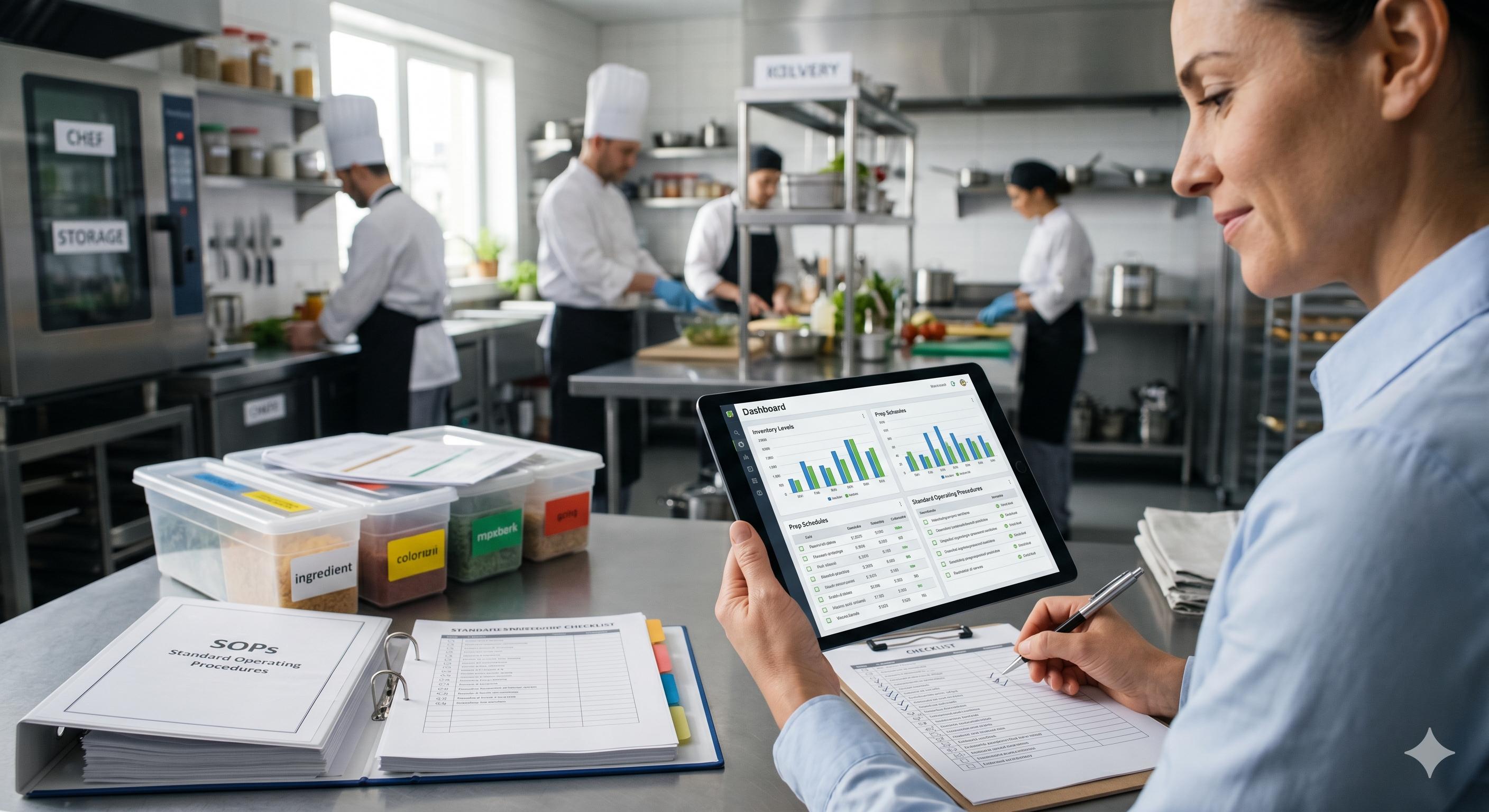
Taming the Chaos: Why Your BOH Systems Are the Secret to Your Sanity
If you walk into your kitchen at 5:00 AM and feel an immediate wave of mounting anxiety, you likely don’t have a "people" problem—you have a systems problem.
The Back-of-House (BOH) is the engine room of your bakery. If the engine is unorganized, undocumented, and running on "vibes" rather than data, the entire business slows down. You find yourself answering the same questions ten times a day, hunting for the bench scraper, or realizing—too late—that someone forgot to order heavy cream.
At Pastry Per Diem, we believe that BOH Organizational Management is the "invisible" ingredient in every successful pastry program. When your systems are tight, your labor costs drop, your quality stays high, and you finally get the mental space to lead. Here is how we build a high-functioning kitchen environment.
1. The Language of the Kitchen: Standardized Documentation
In a professional kitchen, verbal instructions are where consistency goes to die. If a task isn't written down, it doesn't exist.
- Digital Prep Sheets: Moving away from handwritten scraps of paper to standardized, dynamic prep sheets. These should tell your team exactly what to make, how much to make (based on "par" levels), and the priority order for the day.
- Master Recipe Books: No more "I think it’s 500g of sugar." Every station should have a clear, laminated, or digital recipe guide with visual cues for every stage of the bake.
- The "Opening/Closing" Pulse: Most kitchen friction happens during shifts changes. Clear, non-negotiable checklists for opening and closing ensure the "morning you" isn't cleaning up after the "night you."
2. Ergonomics and Station Logistics: The "Pivot" Rule
Every second your baker spends walking across the kitchen to grab a whisk or a sheet pan is a second you are paying for that isn't producing a product. We analyze your kitchen layout using the "Pivot Rule": a baker should be able to execute 80% of their primary tasks by simply pivoting, not walking.
- Tool Shadowing: Every tool has a home. If the offset spatula isn't in its designated spot, it’s a system fail.
- Ingredient Flow: Are your high-use items (flour, sugar, salt) at waist height? Are your seasonal or low-use items stored higher or further away?
- The "First-In, First-Out" (FIFO) Flow: We organize your walk-in and dry storage so that the physical layout naturally forces proper rotation.
3. Communication Without the Noise
A chaotic kitchen is usually a loud one. High-functioning BOH environments use visual cues to reduce verbal noise.
- Labeling 2.0: It’s not just "Date and Initial." We implement color-coded systems for "Use First" items or specific allergen-sensitive prep areas.
- The "Out-of-Stock" Board: A dedicated, central location where "low" or "out" items are recorded the moment they are spotted—preventing the panicked mid-mix realization that you’re out of eggs.
- Station Ownership: Giving every team member a specific zone they are responsible for organizing and maintaining. This builds "pride of place" and accountability.
4. Managing the "Labor Leak"
Labor is your highest controllable expense. If your BOH is disorganized, you are likely over-scheduling to compensate for inefficiency.
When your BOH basics are mastered, you can see exactly where labor is being wasted. Are three people standing around one small table? Is the dish pit backed up because of a poor flow of dirty sheet pans? By tightening the organizational "basics," we often find that a kitchen can produce 20% more volume with the exact same staff.
Pastry Per Diem Pro-Tip: Spend one hour on a Monday morning "staging" your dry storage and walk-in. If your team can't find what they need in 30 seconds, your organization is failing. Label the shelves, not just the bins.
From Chaos to Competence
Moving from a "scrappy startup" mindset to a professional culinary operation requires discipline. It’s about creating a environment where the system does the heavy lifting, so your people can do the creative work.
Ready to Tame Your Kitchen?
If you’re tired of the "morning fire drills" and the constant organizational friction, Pastry Per Diem specializes in BOH build-outs and management basics. We don't just organize your shelves; we organize your workflow, your communication, and your peace of mind.
Contact Pastry Per Diem Today for an operational audit. Let’s get your engine running smoothly.
Scale Your Business With Confidence
Get weekly insights on kitchen operations, recipe management, and growth strategies—straight from a pastry consultant who understands your challenges.
What's Next?
We're committed to seeing your business thrive. Check out our other resources to start taking your business to the next level.
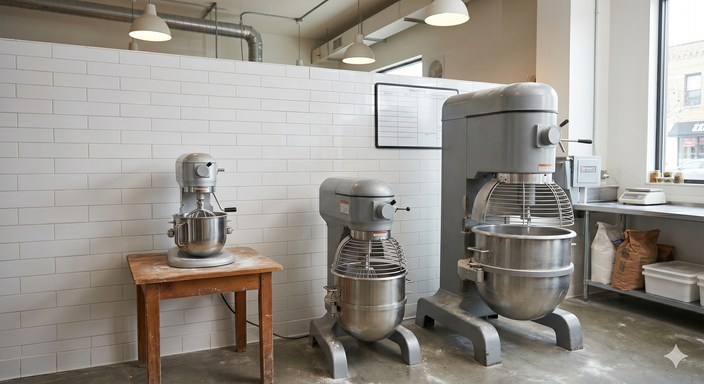
How to Choose the Right Mixer for Your Bakery
A larger mixer can improve production, but only if it fits the realities of your operation. Here is what small bakery owners should consider before investing in a new machine.
.png)
Operation Reset Session
The Private Operations Reset Session is a focused 45-minute working session designed to help food business owners regain clarity and control over their operations. Together, we identify structural friction, isolate the root causes of inefficiency, and outline immediate, practical adjustments that restore stability and forward momentum.
