

Why Every Business Needs a Written Mission, Vision, and Values Statement
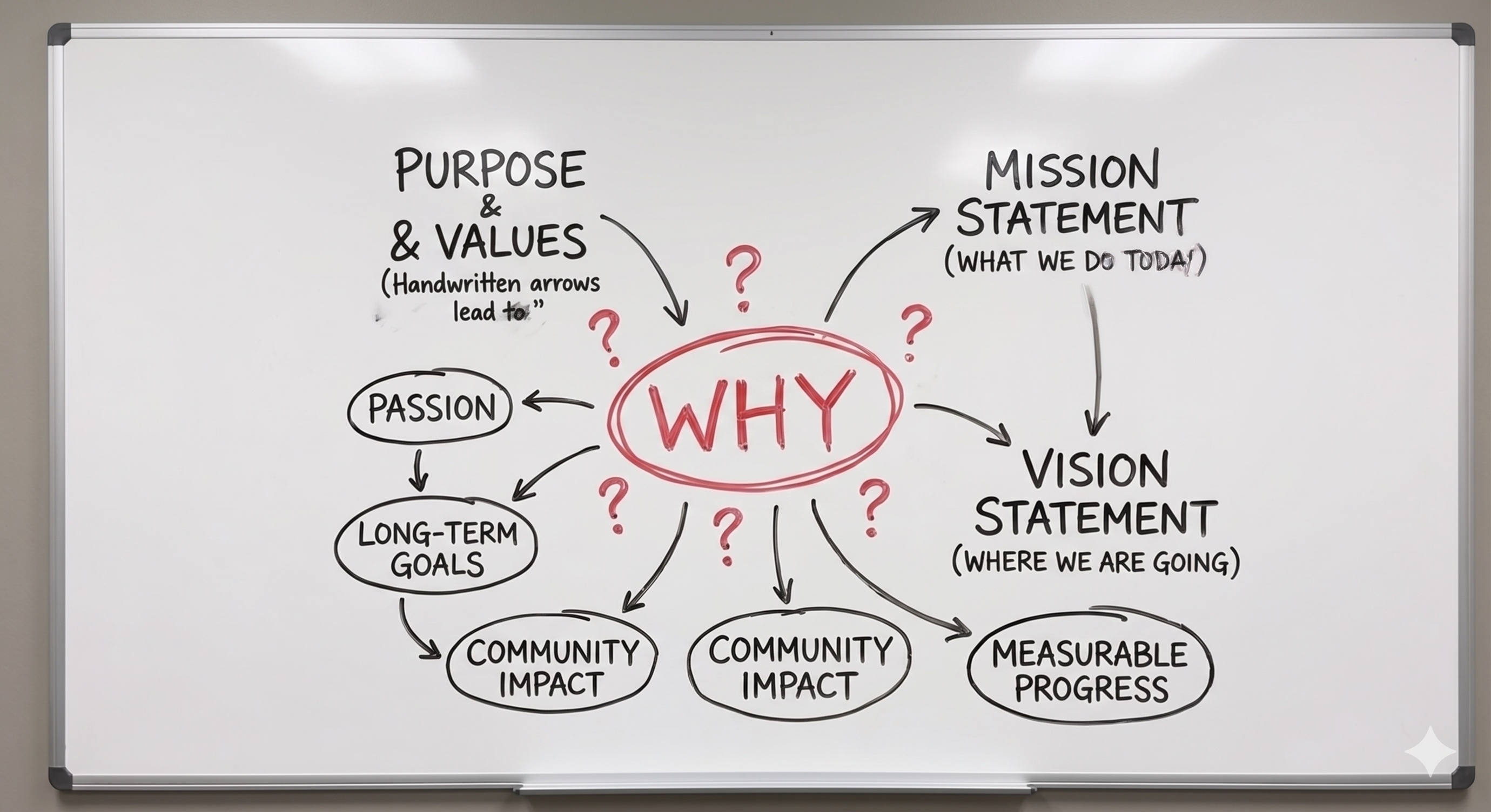
The Power of Defined Direction: Why Every Business Needs a Written Mission, Vision, and Values Statement
There are certain things in business that look optional from the outside, until you begin to see how much confusion, inconsistency, and wasted motion come from not having them. A written mission, vision, and values statement is one of those things. While many businesses treat these as polished language for a website or onboarding packet, they are far more valuable than that. When developed thoughtfully, they become practical operating tools that help shape leadership, culture, hiring, decision-making, and long-term growth. Their core function is to provide direction, not decoration.
A business without clearly written foundations often ends up making decisions in reaction to pressure rather than in alignment with purpose. It may still function and even grow for a while. But growth without clarity has a way of creating drift. Teams become misaligned, standards become inconsistent, and opportunities are pursued because they are available, not because they are right. Over time, that lack of definition affects operations and weakens the brand itself. A written mission, vision, and values statement helps prevent that drift by giving the business language for who it is, what it stands for, and where it is headed.
The Three Pillars: Mission, Vision, and Values
These terms are often grouped together, but each one serves a distinct purpose:
- Mission: Defines the company’s present purpose. It answers immediate questions like What do we do? Who do we serve? What value do we provide? It keeps the business grounded in its current role.
- Vision: Is future-facing. It outlines what the company is building toward and what success looks like over time. It turns growth into something intentional instead of accidental.
- Values: Define how the company behaves while carrying out that work. They shape standards, decisions, leadership conduct, communication, and expectations across the organization.
Together, mission and vision set the direction, while values guide conduct and choices along the way. They create structure, identity, and discipline.
Strategic Alignment and Intentional Culture
One of the most practical reasons to have these statements written is alignment. Businesses often become fragmented simply because people are working hard in different directions. Written clarity reduces that confusion and gives strategic initiatives something to anchor to. It allows leaders to ask: Does this support our mission? Does this move us toward our vision? Does this reflect our values? This is essential for growing businesses and brands trying to scale without losing themselves in the process.
Furthermore, culture is shaped by what is modeled, repeated, rewarded, and tolerated. If there are no written values, culture tends to form by default instead of by design. Values create a behavioral standard for how people work, communicate, solve problems, and represent the business. Customers feel these values in the consistency of service and the integrity of leadership. For hospitality brands, food businesses, and service-driven companies, this behind-the-scenes clarity is exactly what creates confidence in front of the customer.
Empowering Employees, Hiring, and Decision-Making
A strong business does not only give people instructions; it gives them meaning. When employees understand the company’s mission and vision, they see how their role contributes to something larger than a simple checklist. That context improves engagement, motivation, and accountability because the work stops feeling random and starts feeling connected.
This clarity also acts as a magnet for aligned talent. People are more likely to join a business when its direction feels meaningful and its principles feel clear, supporting stronger long-term commitment.
Finally, growth brings choices. Without a written framework, leaders can find themselves making decisions based on urgency or convenience rather than principle. A written mission, vision, and values statement gives leaders a filter for decision-making. It does not remove complexity, but it does introduce coherence.
Writing It Down Is What Makes It Usable
Many founders believe they already know their mission, vision, and values on an instinctive level. But instinct is not enough when a business needs to communicate clearly, train consistently, hire intentionally, and scale responsibly. Writing these statements down forces clarity, sharpens vague ideas, and exposes contradictions. It turns internal beliefs into something that can be shared, referenced, and applied to guide onboarding, branding, and strategy.
Build a Solid Foundation with Pastry Per Diem
Need help defining the written foundations of your brand? Pastry Per Diem helps businesses build sharper internal clarity through strategic thinking, operational structure, and business tools designed to support growth with intention.
Contact Pastry Per Diem Today to start growing your business with absolute clarity!
Scale Your Business With Confidence
Get weekly insights on kitchen operations, recipe management, and growth strategies—straight from a pastry consultant who understands your challenges.

What's Next?
We're committed to seeing your business thrive. Check out our other resources to start taking your business to the next level.

10 Essentials Every New Business Should Establish in 2026
Starting a business in 2026 still offers real opportunity, but the environment is more demanding than many founders expect. New business formation remains active, yet growth expectations are softer, customer acquisition is harder, and strong fundamentals matter more than ever. These 10 essentials help new businesses build with more clarity, resilience, and staying power.
Brand Architecture Playbook
The Brand Architecture Playbook is a strategic framework for building brands that are structurally sound, emotionally resonant, and commercially consistent. It moves beyond aesthetics and into positioning, differentiation, offer design, narrative, and internal alignment — so your brand doesn’t just look elevated, it operates with precision. Designed for founders, consultants, and in-house teams, this is where brand becomes infrastructure.
