

The Anatomy of a Profitable Menu: Balancing Variety with Operational Ease
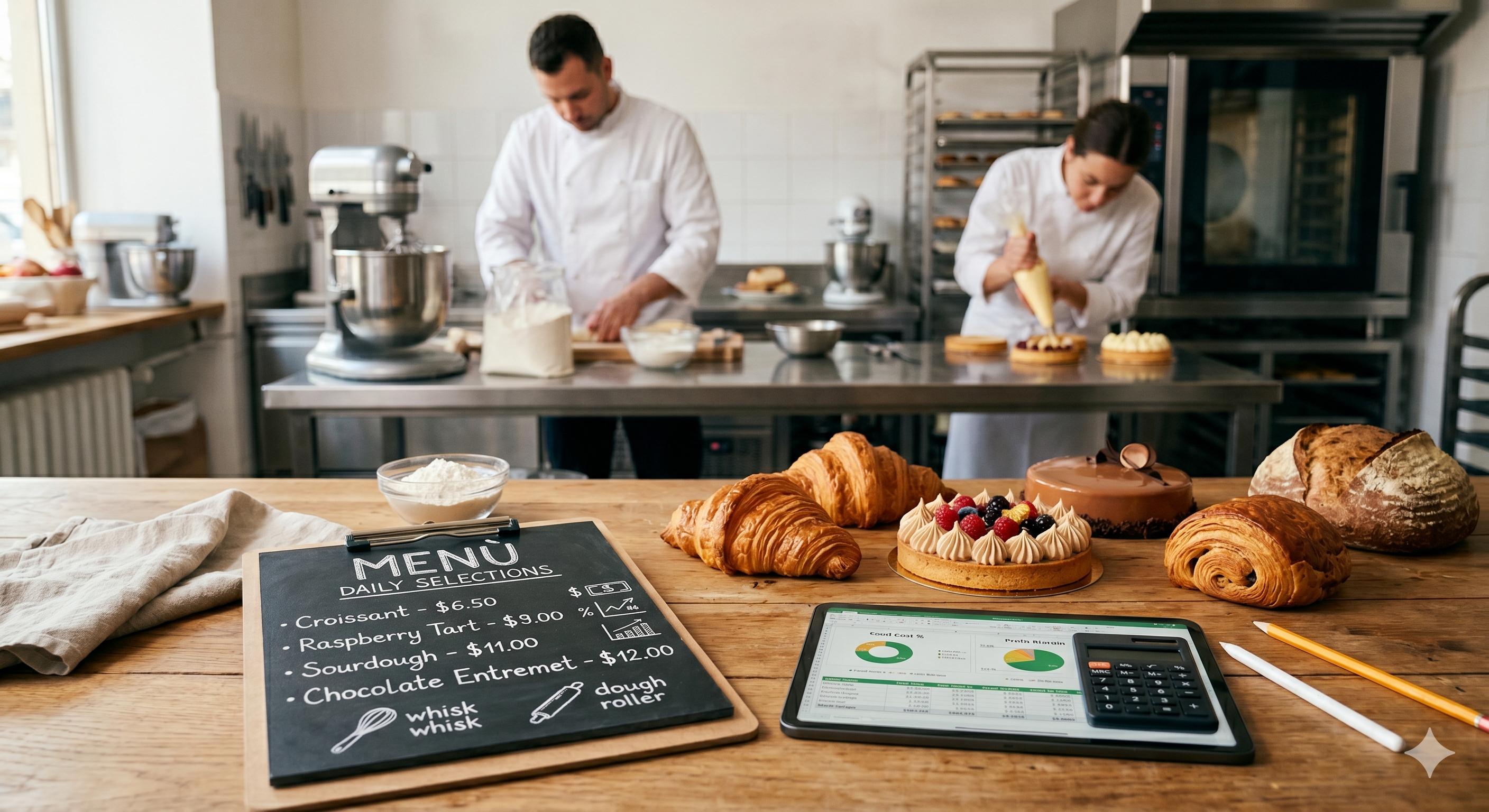
The Anatomy of a Profitable Menu: Balancing the Art of Pastry with the Science of Scale
In the world of professional pastry, a menu is your most important internal document. It dictates your grocery list, your storage requirements, your labor needs, and ultimately, your take-home pay.
Too often, menus are built on "what sounds good" or what the lead baker feels like making that morning. While passion is essential, a menu built on whimsy usually leads to high waste, confused customers, and paper-thin margins.
At Pastry Per Diem, we believe in Menu Engineering. This is the process of designing a selection that hits three critical targets: Consumer Appeal, Operational Ease, and Financial Sustainability. Here is how we build a menu that actually works for your business.
1. Analyzing Your Menu Mix
Before you add a new seasonal tart or a complex laminated pastry, you have to understand the data of your current offerings. We use a "Menu Mix Analysis" to categorize every item you sell:
- Stars (High Profit, High Popularity): These are your icons. The almond croissant everyone drives across town for. These stay on the menu forever.
- Plowhorses (Low Profit, High Popularity): The plain baguette or the chocolate chip cookie. You sell hundreds, but the margins are tight. We look for ways to "up-sell" these or subtly decrease their production cost without losing quality.
- Puzzles (High Profit, Low Popularity): That expensive, beautiful yuzu entremet that only sells three units a day. We need to figure out if it’s a marketing problem or a placement problem.
- Dogs (Low Profit, Low Popularity): These are the quiet killers of your kitchen. They take up space in the case and time on the prep list but give nothing back. We cut these immediately.
2. The Power of Cross-Utilization
One of the fastest ways to lose money in a bakery is by having "one-hit-wonder" ingredients—that specific expensive puree or rare nut flour that is only used in a single, low-volume item.
Strategic menu development focuses on Cross-Utilization. If we are making a high-quality vanilla bean pastry cream for a fruit tart, can we also use it as a filling for a brioche donut? Can the scraps from your croissant production be turned into "monkey bread" or savory "twice-baked" options?
Every ingredient in your walk-in should be working double or triple duty. This reduces your inventory "dead stock," lowers your waste, and gives you more leverage when negotiating with suppliers.
3. Designing for Operational Flow
A menu might look beautiful on paper, but if it requires four different bakers to use the same single 20-quart mixer at 5:00 AM, it’s a failure.
When we develop a menu, we map out the Equipment and Labor Flow:
- Station Balance: Ensure you aren't overloading the oven while the prep tables sit empty.
- Skill Leveling: A sustainable menu has a mix of "high-touch" items (hand-shaped, intricately decorated) and "high-efficiency" items (scoop-and-bake, slab-style bakes) that can be executed by junior staff.
- The "Prep-to-Plate" Ratio: We analyze how many minutes of labor go into every single unit. If a $6 pastry takes 12 minutes of active labor to finish, you are likely losing money.
4. Seasonal Strategy and Limited Time Offerings (LTOs)
Seasonality isn't just about flavor; it's about scarcity and excitement. A well-engineered menu utilizes a "Core + Seasonal" model. Your core items provide the stability and brand recognition, while your LTOs (Limited Time Offerings) allow you to test new concepts, use peak-season produce at its cheapest price point, and give your regular customers a reason to visit more often.
Pastry Per Diem Pro-Tip: Use the "Rule of Three" for new menu items. Before adding a permanent item, test it as a weekend special for three consecutive weeks. Track the "sell-through" rate and get direct customer feedback. If it doesn't hit your target "Star" status by week three, it doesn't make the cut.
Moving Beyond the Recipe
A recipe tells you how to make a dish; a menu tells you how to run a business. Whether you are launching a full seasonal refresh or just need to tighten up your core offerings to improve your food cost, Menu Creation and Development is the most profitable investment you can make in your operations.
Is Your Menu Working for You—or Against You?
At Pastry Per Diem, we don't just hand you a list of recipes. We hand you a strategic plan for your product line. We help you engineer a menu that delights your guests, utilizes your ingredients efficiently, and—most importantly—protects your bottom line.
Scale Your Business With Confidence
Get weekly insights on kitchen operations, recipe management, and growth strategies—straight from a pastry consultant who understands your challenges.
What's Next?
We're committed to seeing your business thrive. Check out our other resources to start taking your business to the next level.

Menu Engineering for Profit
The webinar breaks down psychological pricing and menu layout tactics (anchoring, placement, bundles), high-margin menu structures (pairings, add-ons, tiered portions), and the operational backbone that prevents profit leaks (portion control, yield tests, waste reduction, SOP updates). Real-world case study patterns show how simplification and menu architecture can improve speed, accuracy, consistency, and profitability.
.png)
Operation Reset Session
The Private Operations Reset Session is a focused 45-minute working session designed to help food business owners regain clarity and control over their operations. Together, we identify structural friction, isolate the root causes of inefficiency, and outline immediate, practical adjustments that restore stability and forward momentum.
